


UNPLUGGED DANCE
Residential Dance & Somatic Educational Program
April 26 – June 13, 2026 | Lefkada, Greece
A deeply embodied educational experience in dance, somatics and collective practice
Unplugged Dance is a residential program that brings together contemporary dance practices, somatic inquiry, collective learning and embodied research.
It is an immersive space to live, move, reflect and create together.
This program emerges from the desire to approach dance not only as technique, but as a way of understanding ourselves — through the body, through relational practice, and through shared time and space.
Here, movement becomes a tool for awareness, regulation, expression and transformation.
Listening to a Permanent Culture of Dance
This year, Unplugged Dance is oriented toward exploring movement as a regenerative, living practice that nourishes our bodies, our artistic work, and the ecosystems we inhabit.
The program invites an approach to dance that understands movement as a means of ecological awareness and approaches the dancing body as a living, multidimensional organism, inherently interconnected with its environment. Practices are held as ways of cultivating relational sensitivity, an embodied attentiveness to the living networks that connect us with one another and with the world around us.
This year’s workshops are shaped around:
– eco-somatic perspectives that engage with the intersections of dance, ecology, and community, drawing inspiration from principles of permaculture and deep ecology.
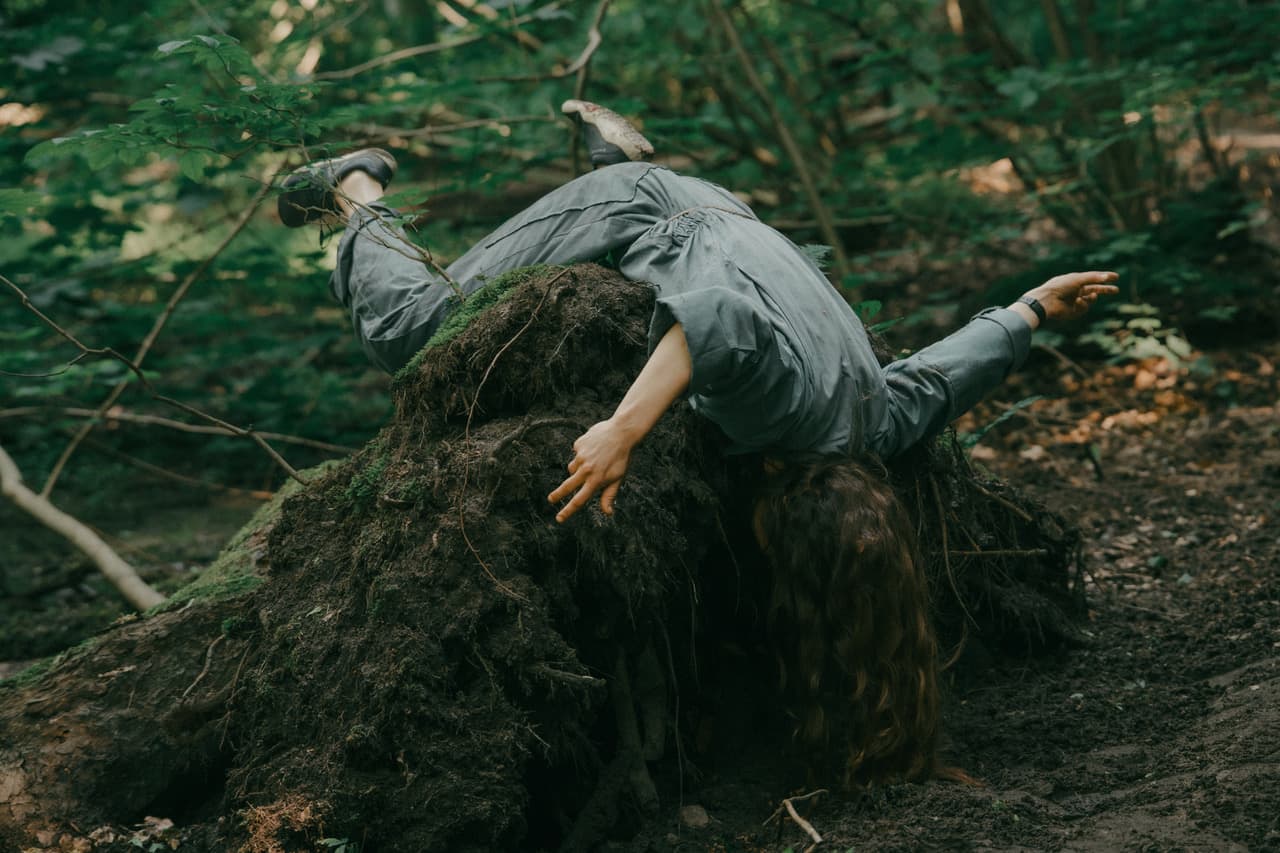
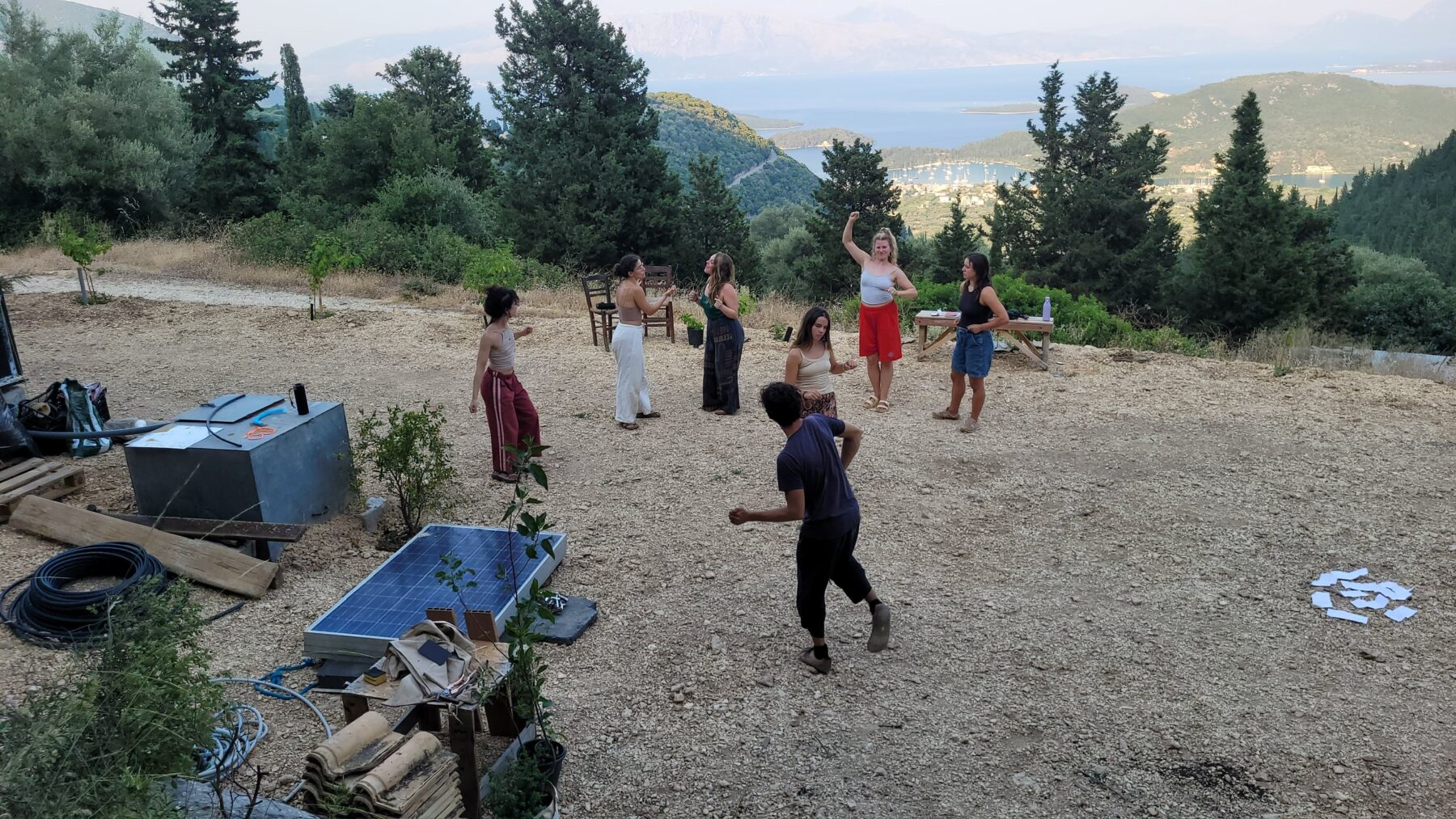
– site-specific practices in natural environments that invite direct engagement with the textures, rhythms, and dynamics of the landscapes we inhabit. Space is approached not merely as a backdrop, but as a companion in the creative process, where movement can arise in response to land, weather, soundscape, and living ecosystems.
– process-oriented, participatory, and reflective formats. Unplugged Dance prioritizes experience over external validation, treating movement as a learning field in which every gesture is understood as part of an evolving dialogue between body, environment, and artistic practice.
– approaches that expand our understanding of dance as a political, cultural, and ecological practice, capable of cultivating awareness, resilience, and transformation through deeper connection with ourselves, with others, and with the more-than-human world.
Listening to a Permanent Culture of Dance offers a common ground for diverse practices and ways of engaging over the course of the program.
Over the course of seven weeks, you will:
• Deepen your embodied awareness and relationship to your body
• Develop practical somatic tools for self-regulation and creative process
• Expand your movement vocabulary and physical confidence
• Engage in reflective and collective dialogue
• Experience dance as a living, relational and investigative practice
• Strengthen your personal artistic or embodied path within a supportive community
Facilitators – Workshops
Kyveli Kouvatsi & Yorgos Sioras Deligiannis – facilitating landing and introductory sessions
Mariela Nestora ◘ Fieldwork scores
Kate Sagovsky ◘ Rewilding Play
Vasiliki Tsagkari ◘ The body as roots for poetry
Reversed Dances [Franziska Gerth and Lily Pasquali] ◘ The Loss Lab: Embodied Research in a Damaged World
Alessio Castellacci ◘ Embodied Voice Flow
Bodycartography [Olive Bieringa and Otto Ramstad] ◘ Ecosomatic practices for living and dying
Program Structure
The 7 weeks include:
• Opening week for orientation and collective grounding
• Experiential workshops Monday – Friday led by international facilitators
• A continuous group journey with time to deepen relationships and shared practice
• A mid-program phase with additional activities and communal exchanges
• Free weekends for personal or communal time to integrate and recharge for next week – with breakfast offered.
• Daily dance and movement workshops
• Somatic sessions and embodied research
• Time for morning warm up
• Heart circles – Group reflections
• Critical circles – open discussions
• Space for personal exploration and integration
• Collective care of the space
• Final week dedicated to personal research and creative development
Living together is part of the process. The residential format allows depth, continuity and shared learning.
Arrival is on Sunday, April 26, at a specific time that will be announced later. The arrival day includes a welcoming circle and dinner. Departure is on Saturday, June 13, and includes breakfast and collective cleaning. We cannot accept later arrivals or earlier departures, as both the arrival and departure days are integral parts of the program.
Who is it for?
This program is open to adults who feel called to deepen their relationship to movement and embodied practice.
It is for you if you:
• Wish to cultivate a sustainable and conscious body practice
• Are interested in somatics as experiential knowledge
• Want to explore dance beyond performance and aesthetics
• Seek a community-based learning environment
• Are ready to commit to a 7-week immersive process
Previous experience in dance can be supportive but is not mandatory. Commitment and openness are essential.
Participation Fee
The participation fee is €3600 and covers the full 7 week program, including 180 hours of workshops, guided practices and collective activities.
In addition, during the program, daily shared meals are offered and participants are hosted in shared living arrangements, at no additional cost.
If finances are a concern, please don’t hesitate to contact us. We are happy to explore options together.
Guest Participation
This year, alongside the 7-week core group, we are opening a limited number of guest spots during selected weeks.
These short-term participants join the space while the process is already unfolding, experiencing the work in an intensive format and contributing to the collective dynamic of the group. Guest participation is not a shorter version of the program, but a way to enter the environment of the 7-week journey for a defined period of 1 or 2 weeks.
In this case, priority is given to participants with extensive experience (such as colleagues, professionals, etc.) and/or familiar with the Paleohori environment.
The fee for guest participation is on a sliding scale of €590–€750 per week or €1200–€1500 for two weeks.
Guest Weeks:
• May 3 – May 9
• May 10 – May 16
• May 24 – May 30
• May 31 – June 6
If you are interested in joining through the Guest Participation option, please send us a short email introducing yourself and your experience to: unpluggeddance@gmail.com
Registration
To complete your registration for the full program, please fill out this registration form
Once you submit the form, you will receive an email with our bank details to make the full payment within 48 hours. Please send a copy of your payment confirmation at unpluggeddance@gmail.com.
If you don’t see the email, please check your spam folder as well.
If you’d like to connect, we’re always happy to arrange a free call to answer your questions and help you feel confident about your participation.
*This program is open to learners funded through Erasmus+ Adult Education and Youth mobility schemes. Tripudium Collective can act as a receiving organisation for Erasmus+ participants. If you are eligible for Erasmus+ funding through a sending organisation, you may use your grant to participate in the first part of this program.
If you face any problem with registration through our website, as well as for any questions, please contact us at unpluggeddance@gmail.com

We are looking forward to dancing and connecting with you.




Few frequently asked questions…
Participation & Requirements
Do I need to have previous dancing experience to join Unplugged Dance?
There is no need of previous experience in any dance technique. Though, this year’s program is seeking individuals who are ready to commit to a deeper learning and research process. It is open to both professionals and non-professionals with an interest in dance, movement, and somatic practices.
What age groups is the program aimed at?
Unplugged Dance is an all levels program for adults of any age. As long as one wants to be part of a co-moving practice and community is more than welcome to participate in our workshops.
Are the classes therapeutic?
The workshops are clearly artistic and part of non-formal adult education. They are not therapy sessions and are not intended to directly address trauma. Their focus is on artistic expression, dance improvisation, conscious movement, self-observation, and creative exploration. However, engaging in these practices—especially within a supportive environment—may naturally bring up emotions, thoughts, or personal insights.
Facilitators are present to guide the workshops and hold a respectful and attentive space within their scope. They are informed of any relevant medical information you have shared, but they do not provide medical or psychological treatment. Participants are encouraged to take responsibility for their own wellbeing, honor their limits, and communicate any needs or concerns.
Practical & Logistics
What time should I plan to arrive and depart?
Arrival is at 15:00 PM, which allows everyone to arrive with ease and settle gently into the space.
We usually organize a bus or taxi transfer for those who are interested, with a small additional cost (paid directly to the driver). The transfer departs from Lefkada approximately 45 minutes earlier than the meeting time.
Arrival Day Schedule:
Meet at the village at 15:00 PM, and from there we will walk together to Paleohori.
17:00 / 18:30 – Dinner
18:00 / 19:30 – Welcoming circle
On the final day, departure is by 12:00 PM. We begin the morning by waking up, doing some collective cleaning and tidying of the space so we can leave it fresh and clean for the next people, just as we found it, sharing breakfast together, and then saying our goodbyes.
Is there electricity, Wi-Fi, and phone coverage at the venue?
Paleohori is an unplugged, off-grid venue powered by solar energy, which covers our essential electricity needs.
Electricity is available for approximately two hours per day to charge essential devices such as phones, laptops, flashlights, and power banks. Please note that the system cannot support high-consumption appliances, such as hair dryers.
Mobile signal is available throughout the area. Wi-Fi is available during the day in a designated shared space and is suitable for light use, such as emails, messaging, and browsing, rather than heavy streaming or large uploads.
What should I bring with me (clothing, bedding, workshop materials)?
Please bring comfortable, versatile clothing suitable for movement and practice. We recommend dressing in layers.
Some essentials we suggest are:
Backpack
Sleeping bag
Shoes suitable for natural/uneven ground
Comfortable layered clothing
Raincoat
Flashlight
You will receive a detailed INFO PACK with further practical information to help you prepare.
There are no specific materials required for the workshops, except a notebook that you might want to keep notes, tasks etc. Other than that, just come ready to move, explore, and feel at ease.
Are there dietary options other than vegetarian? (e.g., allergies, vegan, gluten-free)
All meals are vegetarian, with vegan, gluten-free, and dairy-free options available if needed. We cook seasonally, using fresh ingredients from local producers and our garden at Paleohori, as we believe that eating locally and in season is a simple and nourishing way to support both the body and the environment.
If you have allergies or specific dietary requirements, please let us know in advance. We will do our best to accommodate your needs, but if your diet is very specific, we recommend bringing any personal essentials with you.
We believe that eating seasonally and locally is a simple and nourishing way to support both the body and the environment.
Is local medical or emergency support available nearby?
Yes. The nearest town with medical services is Nidri, about 20 minutes away by car. The main hospital is in Lefkada town, approximately 40 minutes away, and you can receive care there without medical insurance.
We also keep basic medical emergency supplies at the venue for immediate needs.
If you have any allergies, medical conditions, or specific health needs, please let us know in advance. If you require any personal medication, please make sure to bring it with you and keep it accessible during your stay.
What happens in case of rain?
In case of rain, the workshops will take place in our indoor space — a spacious room with a wooden floor in Neohori village. The program will continue in a protected environment, with some adjustments to the schedule and flow of the day.
Part of our philosophy is to stay in dialogue with the natural elements and adapt with them. Rain may invite us to slow down, rearrange, or experience the activities in a different way, and we embrace this as part of the process. We encourage everyone to come with a spirit of openness and flexibility, trusting that the experience will remain meaningful, engaging, and enjoyable.
Community & Expectations
What is expected of participants in terms of community engagement (shared chores or care of space)?
Everyone staying at Paleohori is invited to take responsibility for their presence, both through practical care and conscious participation in the community.
Paleohori is a self-managed space, without cleaning staff, so everyone contributes to caring for the environment we share. This includes small, collective, and individual actions to keep the space clean, tidy, and well-maintained. These simple daily rituals are part of our shared rhythm, as this place becomes our home for a while.
Community engagement also includes respectful communication, participation in Heart Circles, openness, and consideration toward others. We value mutual support, awareness of our impact, and a willingness to coexist with care and sensitivity.
Caring for the space and for one another is part of our philosophy. Through these small acts, we cultivate shared responsibility, reciprocity, and a deeper connection with the land and the community.
What are heart circles?
Heart Circles are a simple daily ritual and an important part of the shared rhythm at Paleohori. They take place each day (except on free days), creating a consistent moment to pause, notice what is present within, and, if one wishes, share it with the group.
They are not therapy spaces, and there is no pressure to share anything “important” or personal. The invitation is simply to listen, acknowledge and express what feels true in the moment. Through our shared intention to be present, listen without judgment, and respect one another, we collectively cultivate a space that feels safe, supportive, and human.
Heart Circles are part of the core practice of the program, and everyone is invited to take part in this shared moment. They help us connect beyond roles and surface interactions, nurturing trust, emotional awareness, and collective care. In our experience, this simple ritual holds a deeply meaningful and grounding power, supporting both individual and collective presence.
Will I be able to work at the same time I am participating in a program?
Unplugged Dance is an immersive program and invites your full presence. With 6–7 hours of daily practice, along with communal and reflective time, we do not recommend working during the program.
Working regularly alongside the program can make it difficult to fully arrive and engage in the shared experience. Presence and continuity support a deeper connection — both personally and within the group — and dividing attention may affect this collective rhythm.
The intention of the program is to offer a space to unplug, reconnect with nature, return to the body, and cultivate meaningful relationships with oneself and the community.
There are also designated free days for rest and personal time, which participants may use as they wish. We encourage using this time to rest and integrate the experience.
We invite participants to join with the intention and availability to be fully present.
Will I have enough time to visit the beach and places on the island?
Yes. The program includes two free days (weekends), giving participants space to rest, explore, or spend their time as they wish.
During those days, you’ll have the opportunity to visit the beach, explore the island, or simply rest and integrate your experience in a way that feels right for you.
Registration & Fees
Is there an early-bird discount or sliding scale for fees?
There is a sliding-scale participation fee up until a certain time. This year the sliding-scale participation fee for Unplugged Dance is available until February 28, 2026.
We invite you to choose the fee option that best reflects your current financial situation. Paleohori eco-art space is an independent, self-funded, non-profit project sustained entirely through participation fees. Any contribution above the regular price helps make supported places possible for others – because we may all be in the same sea, but not in the same boat.
What is included in the participation fee?
The participation fee covers the full program, including all the workshops (hours may differ in between workshops and duration), guided practices and collective activities like excursions to nearby villages that are part of the workshop processes.
In addition, during the program, daily shared meals are offered and participants are hosted in shared living arrangements, at no additional cost.
Is there a payment plan or installment option?
Payment is normally made in two installments. However, if it is easier for you, we are happy to offer additional installments.
Please note that for three or more installments, an additional fee of €3 per transaction applies to cover the bank transfer costs charged to us.
In all cases, the first installment serves as a deposit to secure your place. The final installment is due one month before your arrival. Any intermediate installments can be arranged, and we will be happy to create a payment plan that feels manageable and convenient for you.
Can I transfer my booking to another person?
Yes, you can transfer your booking to another person. Please inform us in advance and provide their full details so we can update the registration accordingly.
The new participant will need to complete the same application process, including filling out the registration form and, participating in an introductory call with us. This helps ensure that the program remains supportive and aligned for everyone involved.
What happens if the program is cancelled by the organisers?
If the program is cancelled by us, you will receive a full refund of the amount you have paid. Alternatively, if you prefer, you may transfer the full amount to another program within the same season or to a future program.
Is there a scholarship or supported place available?
A number of supported places are available through our sliding scale participation fee, offering further flexibility to help make the program accessible to a wider range of participants.
In addition, this year, we offer seven full scholarships for Greek citizens for the Unplugged Dance program, supported by a fund from the Hellenic Ministry of Culture
Lastly, limited partial scholarships may be offered in situations of genuine financial need. They are considered with care, on a case-by-case basis, and are intended as a supportive exception rather than a standard option. Eligibility is grounded in economic disadvantage, with particular priority given to individuals who have been directly affected by war, conflict, or displacement.
What is the cancellation policy in your program?
As an independent, non-profit project without regular public funding, we strive to offer the lowest possible price. The project relies on the commitment of all participants, which is why, in case of cancellation on your side, the amount paid is non-refundable, with the only exception being circumstances of force majeure, such as closed borders, a pandemic, war, or natural disasters preventing your travel. If the event is canceled for any reason, the entire amount paid will be refunded without reservations.
How will I get to Neohori?
You can find detailed information on how you can get to Neohori Lefkada here
Please feel free to send us your questions!
For 2026, Unplugged Dance will offer 7 full scholarships to emerging dance professionals from Greece who wish to deepen their research, coexist within an international community of shared interests, and enrich their practice through contemporary tools and methodologies.
Considering the gaps in formal professional dance education in Greece, particularly in artistic and pedagogical approaches, the limited postgraduate opportunities in Greece, as well as the systemic inequalities, this program offers a meaningful alternative for recent graduates of professional dance, theater and performance schools. It aims to provide access to creative tools and knowledge that will help participants deepen their practice and expand their artistic resources.
The scholarship program is financially supported by the Greek Ministry of Culture for the period 2025-2026.

Αν ενδιαφέρεστε να αιτηθείτε πατήστε εδώ.

There are no upcoming events at this time